Wednesday, October 04, 2006

99.9% success is not good enough!


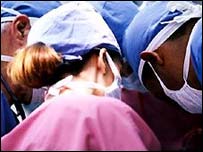
Horrifying as it may seem there are a number of cases every year in the NHS where patients have operations on the wrong part of their body.

The latest report says that 40 patients had this misfortune last year and while the Department of Health may tell us these are not high numbers, considering the millions of successful operations that take place, it is a significant increase on previous years.

Most of all it is tragic for the patients involved and it just unacceptable however we try to defend it.

What this reminds us is that any system - however carefully developed and checked - depends on human beings and as a consequence there will always be errors.

It is just not acceptable that patients suffer in this way and we have to do something about it.

Tuesday, October 03, 2006

Smoking Kills


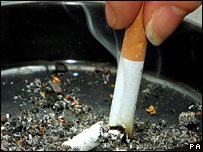
It is early days but in Italy the research seems to confirm what most of us know intuitively. Smoking kills people who smoke AND those in the company of smokers.

I speak as an ex-smoker (I gave up almost 3 years ago) and I have sympathy for smokers who find it difficult to give up the habit.

The early evidence from Italy about their public smoking ban indicates a significant drop in heart attacks.

When I think seriously about it, I used to do the equivalent of taking a five pound note out of my wallet and set fire to it every day. Not only that I inhaled the smoke - I know it sounds crazy!

Apart from the significant cost it was a habit that was killing me before my time was due.

Having said that I recognise the challenge of giving up and it is not easy.

I hope in my lifetime we see a ban on smoking in the UK – it may be the only way to wipe it out completely.

Monday, October 02, 2006

Mr Gandhi got it right!

Mahatma Gandhi - Bombay Hospital Motto
I enjoyed speaking at a National Conference in Glasgow, Scotland last week.

The two day conference was hosted by the
Scottish Primary Care Collaborative

About 200 NHS professionals were brought together to share good practice in Primary Care and I was asked to speak on how patient involvement can lead to change in healthcare services.

The talk was well received and it was great to see and hear the enthusiasm of the delegates and their willingness to welcome the patients’ input to improving services.

Although I am often critical that progress is slow within the NHS to involve patients more I never ‘blame’ the NHS front line clinical staff for this slow pace of change.

What is clearly needed is leadership from the top about this with Chief Executives showing by example that patients – the customers – are the reason we have jobs in the NHS.

If a simple reminder is ever needed about the role of staff working in the NHS this is it. I always use the Bombay Hospital Motto written by Mahatma Gandhi in my talks.

I have published this on my Blog before and I make know apologies for re-producing it again. Healthcare is not about complex management processes policies and procedures, it is about caring for people.

Please excuse the male emphasis as political correctness was not around when Mr Gandhi wrote this ….

'Bombay Hospital Motto

A patient is the most important person in our Hospital. He is not an interruption to our work, he is the purpose of it. He is not an outsider in our Hospital, he is a part of it. We are not doing a favour by serving him, he is doing us a favour by giving us an opportunity to do so.'

Mahatma Gandhi

Sunday, October 01, 2006

The Black Dog can be tamed

A good friend suffered a breakdown a few years ago.

At that time he worked as deputy Chief Finance Officer in a multi-million pound health service organisation. He was off work for several months and the general opinion among the ‘chattering classes’ in healthcare was that this was the end of his career and he would never reach the supposed ‘pinnacle’ in NHS finance of Chief Financial Officer.

Doubts were expressed whether he was ‘strong enough’ to reach the ‘top’ job.

The great news is not only did he return to work after a long spell of recuperation but he also reached that exalted position of Chief Financial Officer in another health service organisation. He is now enjoying a well earned retirement.

There are many issues arising out of this.

  • Mental health problems are non discriminatory – we are all susceptible to mental health problems.
  • Why do so many ‘macho school’ managers believe mental health problems in some way mean you are ‘soft’ if you are affected by them?
  • People who suffer mental health problems recover just like we recover from any illness.
  • To allow work to adversely affect our mental health in a negative way is not worth it. Life is about many things and work is just one of those things.
  • Sometimes it is better to just leave if you are suffering in that way, however difficult that may seem when we have bills to pay.

Mental health problems range from being sad through to problems that require hospital in-patient treatment. Depression is the single most well known mental health problem and when we look at the rich and famous who admit to suffering depression we see Sir Winston Churchill, Robbie Williams, John Cleese and Tom Peters to name but a few.

It illustrates, to me anyway, that people can still ‘perform’ at an amazingly high level professionally, despite occasionally being visited by the ‘Black Dog’ as Sir Winston famously called depression.

Logically therefore the same thing applies to us lesser mortals like my friend.

Instead of avoiding the subject or having stereotyped negative views about mental health problems, wouldn’t it be great if business could set an example and be positive about firstly accepting that many managers suffer from depression and other mental heath problems than to implicitly signpost those people as failures, soft or unable to reach the top?